Why Cybersecurity is No Longer Optional for Renewable Energy Projects in Israel
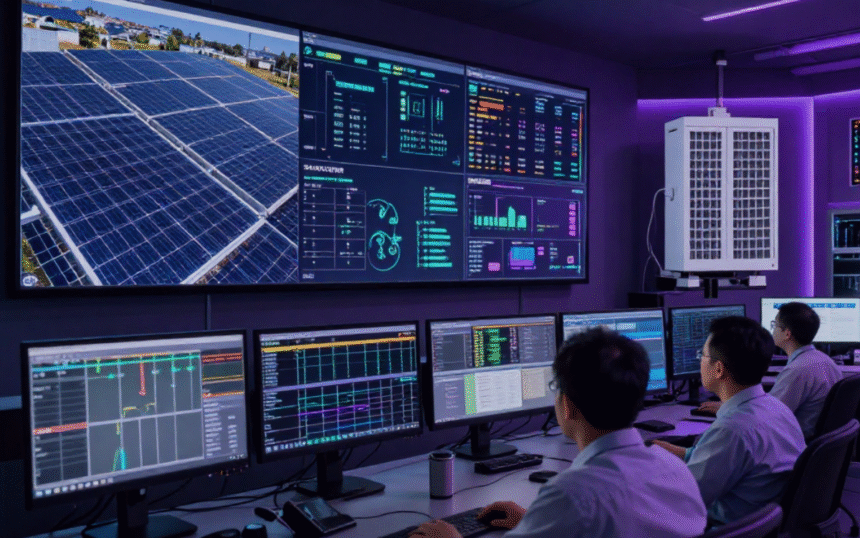
Every renewable energy facility connected to the grid is also a potential cyber target. As solar power plants, Battery Energy Storage Systems (BESS), wind farms, SCADA platforms, and energy management systems become increasingly interconnected, cybersecurity has become essential for ensuring operational resilience, regulatory compliance, and grid stability in Israel.
While this connectivity improves efficiency, visibility, and operational performance, it also creates new cybersecurity risks that can directly impact energy production, grid stability, and business continuity.
For new renewable energy projects in Israel, cybersecurity is no longer implemented only during commissioning. It is expected to be integrated throughout the entire project lifecycle—from design and procurement to operation and maintenance.
The Growing Cybersecurity Challenge
Modern renewable energy facilities rely on a complex ecosystem of operational technology (OT) and industrial control systems (ICS). These systems continuously exchange data between field devices, substations, control rooms, cloud platforms, and utility operators.
Recent cyberattacks against critical infrastructure around the world have demonstrated that operational technology (OT) environments are increasingly targeted. As renewable energy becomes a larger part of national power grids, protecting these assets is becoming a strategic priority.
As digitalization increases, the attack surface expands.
Cybercriminals and nation-state actors are increasingly targeting critical infrastructure sectors, including energy production and distribution. Renewable energy assets are no exception.
A successful cyberattack can disrupt operations, compromise sensitive information, and potentially affect the stability of the electrical grid.
Why Renewable Energy Facilities Are Attractive Targets
Renewable energy facilities depend on multiple interconnected systems, including:
- SCADA Systems
- Power Plant Controllers (PPC)
- Energy Management Systems (EMS)
- Battery Energy Storage Systems (BESS)
- Industrial communication networks
- Remote access solutions
- Monitoring and reporting platforms
If one of these systems is compromised, the consequences can extend far beyond a single facility.
Potential impacts include:
- Loss of operational visibility
- Unauthorized access to critical systems
- Production interruptions
- Reduced energy output
- Equipment damage
- Financial losses
- Regulatory penalties
- Risks to grid reliability and stability
For energy producers, even a short disruption can result in significant operational and financial consequences.
Cybersecurity Regulations in Israel


In Israel, cybersecurity requirements for renewable energy projects are becoming increasingly important as part of the national effort to protect critical infrastructure.
The Ministry of Energy and Infrastructure (MoE) requires renewable energy facilities to implement cybersecurity measures designed to reduce cyber risks and ensure the secure operation of energy assets.
These regulatory requirements are intended to ensure that renewable energy facilities are designed, deployed, and operated with cybersecurity integrated from the outset rather than added as an afterthought.
These requirements may include:
- Cybersecurity risk assessments
- Cybersecurity master plans
- Network segmentation
- Secure remote access controls
- User and identity management
- System hardening
- Security monitoring and incident response procedures
- Documentation and compliance processes
The objective is clear: to ensure that renewable energy facilities remain resilient, secure, and capable of maintaining continuous operation even in the face of evolving cyber threats.
Cybersecurity Must Be Integrated Throughout the Project Lifecycle
One of the most common mistakes is treating cybersecurity as a final-stage requirement.
In reality, cybersecurity should be incorporated from the earliest stages of every project.
Design Phase
Cybersecurity requirements should be considered during the design process, including network architecture, communication pathways, and system integration planning.
Procurement Phase
Cybersecurity requirements should be included in technical specifications and vendor selection processes to ensure secure products and services are deployed.
Installation and Integration
Security controls must be implemented during system deployment, including network segregation, firewall configuration, secure remote access, and device hardening.
Testing and Commissioning
Before commercial operation begins, cybersecurity validation should be performed to verify that all required controls are functioning as intended.
Operation and Maintenance
Cybersecurity is an ongoing process that requires continuous monitoring, vulnerability management, access control reviews, and incident response readiness.
The Importance of OT Cybersecurity
Traditional IT security alone is not sufficient for renewable energy facilities.
Unlike traditional IT environments, where protecting confidential information is often the primary objective, OT cybersecurity focuses on maintaining safe, reliable, and continuous operation of physical processes.
Operational Technology (OT) environments require specialized cybersecurity approaches because they directly affect physical processes and energy production.
Unlike traditional IT systems, OT environments prioritize (SAR):
- Safety
- Availability
- Reliability
A cybersecurity strategy for renewable energy projects must address both IT and OT risks while maintaining uninterrupted plant operations.
How Astoria Cyber Supports Renewable Energy Projects
At Astoria Cyber, we specialize exclusively in renewable energy and critical infrastructure cybersecurity. We support developers, EPC contractors, asset owners, and operators by integrating cybersecurity into every phase of the project lifecycle.
- Cybersecurity consulting
- Cybersecurity Master Plans
- Risk Assessments
- Regulatory compliance support
- OT network architecture design
- SCADA and industrial control system security
- Security integration and implementation
- System hardening
- MSSP and continuous monitoring services
- Incident response support
We support project developers, asset owners, EPC contractors, and operators throughout the entire project lifecycle—from design and construction to operation and maintenance.
Conclusion
The renewable energy industry is a cornerstone of the future energy landscape. As facilities become more connected and technologically advanced, cybersecurity must evolve alongside them.
Cybersecurity is no longer optional.
It is a regulatory requirement, a business necessity, and a critical component of operational resilience.
Organizations that integrate cybersecurity from the earliest stages of a project reduce operational risk, simplify regulatory compliance, and improve the long-term resilience of their renewable energy assets.
Protecting renewable energy means protecting the future of energy itself